Why Recycle Scrap Cables? (Environmental & Economic Benefits)
Discarded electrical cables and wires are a significant part of electronic waste, and recycling them is crucial for both environmental protection and profit. If scrap cables are simply dumped in landfills, they occupy bulky space and can leach toxic substances that harm wildlife and humans.
Open burning of wire insulation – once a common practice to recover metal – is extremely hazardous, releasing carcinogenic dioxins, heavy metals, and other pollutants, and is outright banned in many countries due to strict air quality laws. In contrast, proper scrap wire recycling prevents pollution and conserves valuable resources.
Cables contain a high percentage of metals like copper (and sometimes aluminum) – about 60–70% by weight, with most of the remainder being plastic insulation. Both the metal and plastic in cables are highly recyclable and can be turned into new products, making cable recycling economically attractive. Copper in particular is 100% recyclable without quality loss, and its recovery can yield significant profits.
Rather than selling insulated wires at lower prices or risking illegal processing methods, using a cable shredder as part of a recycling system allows operators to fully separate and reclaim this metal for resale or reuse at much higher value. In short, recycling scrap wire not only helps meet environmental regulations but also maximizes the financial return from waste cables.
What Is a Cable Shredder (Wire Shredding Machine)?
A cable shredder – also known as a wire shredding machine or copper wire granulator – is specialized equipment designed to process waste electrical cables and scrap wiring by cutting them into small pieces and separating the metal from the insulation.
Most cables consist of conductive metal cores (copper or aluminum) surrounded by plastic insulation and jacketing. A cable shredder system can completely separate the metal from the plastic insulation in these cables, producing granulated copper (or aluminum) and clean plastic fragments for recycling.
This mechanical process is an efficient and eco-friendly alternative to manual stripping or burning, especially for cables that are too thin, mixed, or not suited for hand stripping. By chopping the wires into fine granules, the machine exposes the metal and plastic so they can be segregated through screening and separation techniques.
Modern scrap wire recycling systems typically incorporate multi-stage shredding machines and separation units to achieve high recovery rates. For example, a primary cable shredder (often a robust twin-shaft or single-shaft shredder) cuts the cables into coarse pieces, and subsequent granulators grind them down to just a few millimeters in size.
The shredded mixture then passes through air and gravity separators that isolate metals from plastics. The result is clean copper ready for reuse and plastic particles that can be recycled, with minimal residual waste.
In essence, a cable shredding machine is the heart of any scrap wire recycling line – it transforms tangled, insulated wires into valuable raw materials by liberating metals from their insulating shells.
How the Cable Recycling Process Works (Step-by-Step)?
Efficient cable recycling involves a series of processing stages to ensure maximum recovery of copper and other materials. Yung Hsing’s Waste Cable Recycling System uses a multi-stage shredding and separation process to achieve over 99% metal purity. Below is an overview of each step in the process:
Step 1: Pre-Shredding & Iron Removal
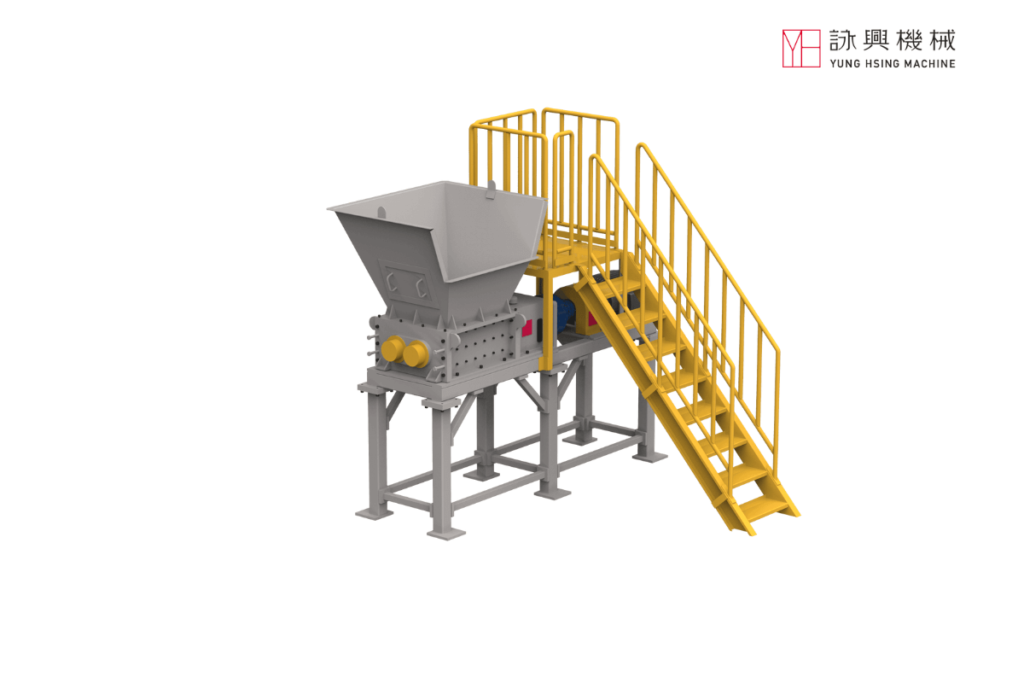
Raw material intake: Whole bundles of scrap wire, cable pieces, even cables with connectors, plugs or small metal fixtures can be fed directly into the system’s intake hopper. No extensive pre-sorting or pre-cutting is required. A heavy-duty twin-shaft shredder (double-shaft shredder) performs the initial crushing, tearing and cutting the input into smaller fragments.
This primary shredding operates at low speed but high torque, easily handling mixed cable waste and even items like outlet sockets or junction boxes that may still be attached.
Magnetic separation: As the cables are shredded, an integrated magnetic separator above the conveyor automatically removes most ferrous metals (iron and steel pieces) from the material stream. This step extracts components like steel armor from cables or screws and nails mixed in, protecting downstream equipment from damage. By eliminating iron at this early stage, the system prevents contamination of the non-ferrous output and improves overall separation efficiency.
Stable material flow: After the first shred and magnet, the rough-shredded cable pieces enter a stabilizer or metering hopper. This device ensures the material is distributed evenly and fed at a consistent rate into the next stage. Maintaining a uniform flow prevents clogs or overload in subsequent crushers and keeps the entire operation running smoothly.
Step 2: Secondary & Fine Shredding (Granulation)
After pre-shredding, the cables (now in smaller pieces) undergo further size reduction in multiple stages to liberate copper completely from plastic. The material is conveyed from the stabilizer into two consecutive shredding machines:
- Secondary crusher/granulator: In this stage, a medium-speed wire granulator or crusher grinds the pre-shredded cables into even finer particles. This is a high-speed cutting mill designed to take the roughly torn pieces from the first shredder and chop them into uniform granules. It may use rotating knives and a sizing screen to control output size. By the end of this second shredding, the cable pieces are significantly reduced and most copper wires are freed from their plastic coating.
- Tertiary fine crusher: Next, the material passes into a fine shredder or granulator for the third stage of pulverization. This machine further refines the particles to very small granule size (often just a few millimeters across). Screens with appropriate mesh openings are used here to achieve the target granule size that ensures copper and plastic are completely separated from each other. By adjusting the screen aperture (“mesh size”), operators can control the final particle size to optimize separation in later steps.
After this stage, the output is a mixture of tiny copper bits, plastic fragments, and some residual fibrous or powdery material.
Step 3: Air Separation of Light Impurities
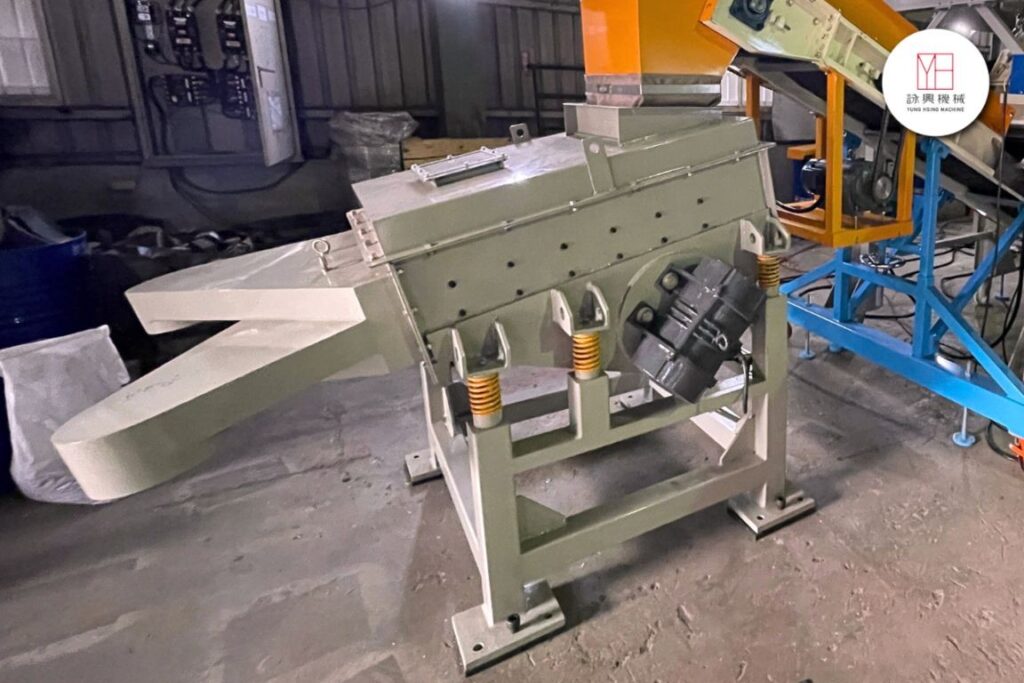
Once the cables have been fully shredded into granules, the mixture of copper and plastic (along with any ultralight debris) is conveyed to a flat-blowing air separator (a type of vibrating air table or air classifier). This machine uses a controlled airflow across a vibrating deck to separate lighter contaminants from heavier materials:
Removing light fractions: As the material enters the flat air separator, a sheet of air blows across it, lifting and propelling the lightweight pieces away. Materials like paper or plastic film, thin plastic threads, fiber fluff, or dust are blown upward or aside since they have much lower density than solid copper or dense plastic granules. These unwanted light impurities (such as cable wrapping tapes, foils, or textile fibers from insulation) are effectively sifted out of the main material stream. They are collected by a dust collection system (via an aspirator or suction hood) and sent to a filter or dust bin. This leaves the heavier copper and plastic granules behind for final separation.
Dust collection: The system’s dust extraction unit continuously pulls away the separated light dust and fines. A pulse cleaning dust collector ensures that no dust is released into the factory air, keeping the operation clean and compliant with environmental standards. (The equipment is designed to keep particulate emissions below 50 mg per cubic meter, meeting strict air pollution regulations.) Collected dust and fluff can be disposed of or processed appropriately, ensuring a tidy and safe working environment around the cable recycling line.
Step 4: Gravity Separation of Copper and Plastic
After removing the ultra-light impurities, the remaining mixture – primarily granulated copper and plastic – moves on to a gravity separation machine. This is the critical final step where the system achieves a complete segregation of metal and plastic based on their weight and density differences:
Vibratory separation table: The granulated material is fed onto a gravity separator, which is often a vibrating table or air shaking table calibrated for copper/plastic separation. The table oscillates and may blow light air from below, causing materials to stratify: heavier particles (copper) sink or move in one direction, while lighter particles (plastic) rise to the top or move in a different direction. Because copper is much denser than plastic, this process can cleanly separate the two types of granules.
Multiple output streams: Yung Hsing’s system divides the output into three streams for optimal recovery:
- Pure copper outlet (first stream): From the top exit, the machine outputs high-purity copper granules. These shiny copper bits are 99+% pure metal, ready to be reused or sold as valuable scrap. The purity of separated copper can reach up to 99.5% in such a process, meaning very little plastic remains attached. This cleaned copper can go directly to smelters or copper product manufacturers for recycling into new products (even new cables).
- Mixed middling outlet (second stream): A middle output of the separator releases a portion of material that is a mix of copper and plastic (sometimes called “middling” or mixed granulate). This fraction contains pieces that weren’t perfectly separated on the first pass – for example, copper granules still partially coated in plastic or vice versa. Rather than wasting this, the system smartly recirculates these mixed granules back into the gravity separator (or to a secondary smaller separator) for another round of separation. By reprocessing the middling stream, the system ensures that virtually all copper is eventually recovered and little is left in the plastic output.
- Copper dust/fines outlet (third stream): The bottom exit of the separator collects the finest particles – copper “powder” and very fine granules that fall through. These are tiny copper-rich bits that are too small to sort in the main flow. The system isolates this fine metal dust so that it can be handled separately.
Copper purity and plastic cleanliness: By the end of the gravity separation stage, the bulk of the copper is separated as nearly pure metal. The plastic pieces emerge almost entirely free of metal contamination. It’s common for such systems to achieve plastic purity around 99%, meaning the plastic product has negligible copper left in it – suitable for recycling or disposal without loss. Meanwhile, the metal recovery rate is maximized, capturing copper even from small strands that might otherwise be lost.
Step 5: Copper Powder Collection & Refining
The fine copper dust collected from the third stream is not discarded. These fine particles are stored in a holding container (silo or drum) as they accumulate. Once a sufficient amount (for example, 100 kg or more) of fine copper-rich dust is collected, the system can re-process this powder to extract any remaining metal:
The gravity separator or a specialized fine separation machine is fitted with an ultra-fine mesh screen (e.g. 180 mesh) and used to run the copper powder batch. This effectively separates out any tiny copper particles from plastic dust.
The outcome is additional recovered copper and ultra-clean plastic powder. Even though these particles are very small, the machine ensures that copper is not wasted. After this secondary refinement, the leftover plastic powder can reach over 99% purity, and the extra copper collected is added to the main copper output. This step highlights the system’s efficiency – even the smallest fractions of copper are recovered, contributing to overall metal yield and purity.
Finally, the recovered copper (granules plus powder) can be sold or recycled as high-grade scrap copper, and the separated plastic can be reused in plastic manufacturing (or processed further, such as pelletizing, if needed). Virtually all parts of the input cable have been sorted into reusable resources, demonstrating the effectiveness of the multi-stage cable shredding and separation process.
Features & Advantages of Yung Hsing’s Cable Shredding System
Yung Hsing Machinery’s waste cable recycling system is a turnkey solution that integrates all the above steps into one streamlined line. It offers several key features and advantages that set it apart in the market:
- High Metal Recovery Rate: Through multi-stage shredding and advanced separation techniques, the system achieves over 99% separation efficiency for copper and plastic. The purity of recovered copper can reach ~99.5%, and plastic output is ~99% pure, meaning maximum reuse of materials and minimal scrap.
- Robust Dual-Shaft Shredder for Pre-Crushing: The included twin-shaft shredder (dual-shaft) can handle a variety of cables and even ancillary metal parts without preprocessing. Its high-torque, low-speed cutters can shred bulk wire bundles, cable harnesses, and even items like metal connectors or steel-armored cables. This durability reduces the need for manual sorting of input materials and ensures continuous operation with mixed scrap.
- Multi-Stage Grinding for Complete Liberation: The system’s combination of shredders and granulators reduces cables to fine granules, fully liberating copper from plastic. Adjustable sieve screens at different stages allow customization of output size to optimize separation results. By the time material reaches the separator, metal and plastic are well dissociated, which improves the efficiency of the final separation step.
- Automated Recirculation & Minimal Loss: Any partially separated output (middling or fine dust) is automatically recycled back into the process, ensuring no copper is left unrecovered. This closed-loop design means higher yields and practically zero metal in the plastic waste stream.
- Advanced Dust & Noise Control: The system is equipped with a central dust collection system and acoustic insulation. Dust extraction points at critical machines capture stray particles and fibers, keeping the facility clean and complying with air emission standards (dust output is kept below 50 mg/m³). The machinery is also sound-proofed to protect workers from noise, creating a safer and more comfortable operating environment. These features help the installation meet strict environmental and workplace safety regulations.
- User-Friendly PLC Control: A centralized PLC (Programmable Logic Controller) controls the entire line, with an intuitive human-machine interface. Operators can run the system in automatic or manual modes, with status indicator lights showing each component’s operation. The smart control system coordinates the conveyors, shredders, and separators so that each stage operates in harmony. This reduces the risk of jams and allows even less experienced operators to manage the equipment effectively. The PLC also provides safety interlocks and emergency stop functions to ensure safe operation.
- Flexible and Efficient Operation: The system’s design allows handling of various cable types – from household electrical wires and communication cables to industrial power cables. Pre-installed magnets and sorting means you don’t need to strip off plugs or remove steel armor manually; the machine can do it all in-line. The heavy-duty construction of shredders and the quality of cutting blades ensure long service life and continuous, high-volume processing. This reliability and throughput translate to higher productivity and quicker return on investment for recycling businesses.
Conclusion: A Precise “Kitchen Grinder” for Cables
In simpler terms, Yung Hsing’s cable shredder system operates much like a high-precision kitchen grinder for your scrap wires.
First, it chops the “ingredients” (waste cables) into manageable pieces, and a “spice magnet” removes any iron nails or steel pieces. Next, it grinds the mixture finer and finer in multiple passes, ensuring everything is evenly processed. It then uses airflow to blow away the lightweight “chaff” (plastic film, dust, threads) – similar to winnowing grain or using a sieve to remove husks.
Finally, like a master chef separating heavy nuts from light flakes, the system uses gravity separation to sort the heavy “meat” (pure copper granules) into one container, and the lighter “peels” (plastic bits) into another. Even the finest copper powder – the last pinch of valuable material – is collected and refined again, ensuring the plastic output is virtually 100% pure and the precious copper is fully recovered.
Through this comprehensive process, a messy tangle of scrap wire is transformed into clean, marketable copper and plastic with minimal waste. For recyclers in the United States, Southeast Asia, or anywhere seeking an efficient cable shredding solution, investing in such an advanced scrap wire recycling system means maximizing material recovery, meeting environmental obligations, and ultimately boosting your bottom line.
Yung Hsing’s cable shredder system provides a proven, high-efficiency method to turn waste cables into valuable resources – a win-win for business and the environment.